
Selecting a new CEO is one of the most consequential responsibilities a healthcare board can undertake. The individual chosen will influence organizational strategy, culture, financial performance, workforce priorities and, ultimately, the communities the organization serves.
Yet even a strong board can encounter challenges if the search process isn’t well defined.
Rudish Health makes sure every CEO search is run effectively and efficiently.
Our expertise and perspective comes not only from decades of executive search experience, but also from ongoing dialogue with healthcare CEOs and board chairs through the Rudish Health Exchange, which brings together experienced healthcare leaders to candidly discuss the challenges and opportunities shaping the industry.
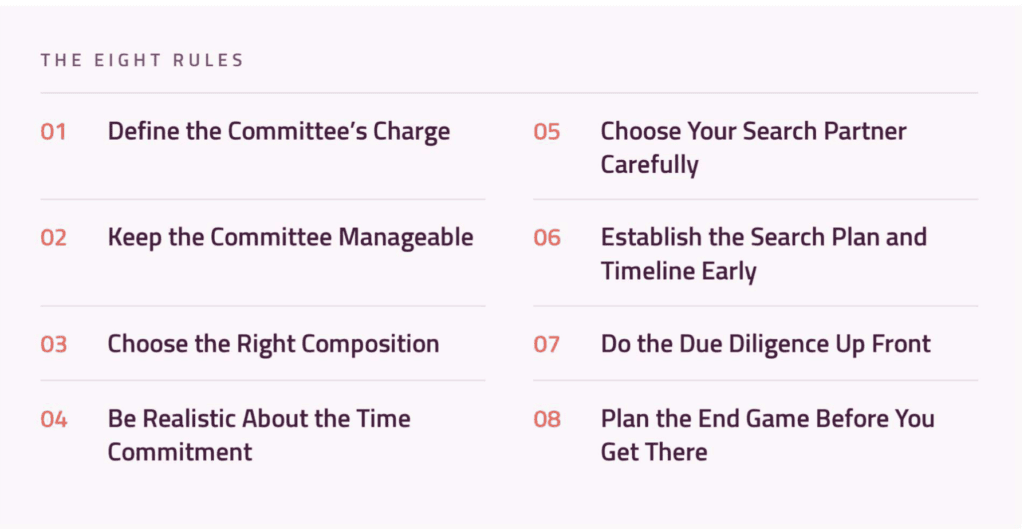
Informed by our experience and insights, here are eight principles for building an effective CEO search committee and setting your search up for success:
1. Define the Committee’s Charge
Start by answering a fundamental question: Is this a search committee or a selection committee?
A search committee typically manages the search process and recommends candidates to the full board, which makes the final selection. In other cases, the board may authorize the committee itself to select the next CEO, with the full board only becoming involved later in the process.
Neither approach works well when roles are ambiguous.
Before the search begins, the full board should clearly define the committee’s authority, responsibilities, and decision-making process. Doing so can prevent confusion and delays, particularly when the field has narrowed to finalists.
2. Keep the Committee Manageable
When it comes to search committees, bigger isn’t necessarily better.
An odd-numbered committee with fewer than 10 members is generally most effective. This provides enough perspectives for meaningful discussion while keeping meetings, interviews, and decision-making manageable.
A smaller committee also makes it easier to maintain momentum throughout what can be a lengthy process.
3. Choose the Right Composition
A strong committee should bring together different perspectives without sacrificing its ability to reach consensus.
Consider which voices are important to the decision. For a community-focused nonprofit healthcare organization, that might include representatives from civic or community leadership. Health systems may choose to include physician or medical staff leadership alongside board members.
If you invite stakeholders from outside the board, be clear about their role. Their time and perspective should be genuinely valued, not included simply for appearances.
The goal is a committee that reflects the organization while remaining capable of making difficult decisions .
4. Be Realistic About the Time Commitment
Serving on a CEO search committee requires more than attending a few candidate interviews.
Committee members may participate in planning meetings, stakeholder discussions, candidate reviews, and multiple rounds of interviews. The most important stages of the search require consistent participation.
Before appointing members, make sure they understand the commitment and can prioritize the process.
Establishing key dates early is one of the simplest ways to improve participation. Put critical milestones (particularly first- and second-round interviews) on calendars well in advance.
5. Choose Your Search Partner Carefully
If you engage an executive search firm, look beyond firm size and name recognition.
Consider the firm’s experience with CEO and senior executive searches in healthcare, as well as its understanding of organizations like yours. Just as important, ask about the individual consultants who will actually lead your engagement.
Who will advise the committee? Who will assess candidates? What healthcare experience do they bring? What access do they have to potential candidates, including executives who may not be actively looking for a new role?
Boutique firms can offer deep industry expertise, senior-level attention, and broad access to candidate networks. Ultimately, the right partner is the one with the experience, relationships, and judgment to guide your board through a complex leadership decision.
6. Establish the Search Plan and Timeline Early
A well-run search should have a clearly defined roadmap.
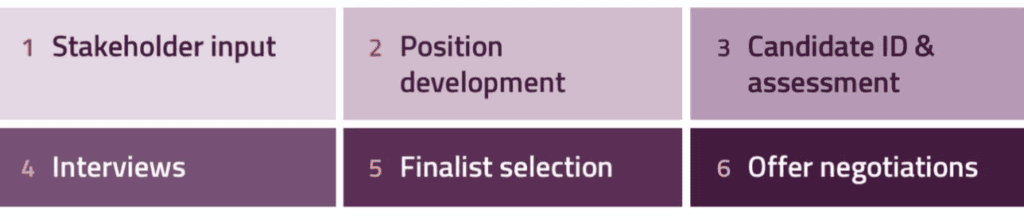
Your search partner should work with the committee to establish milestones for stakeholder input, position development, candidate identification and assessment, interviews, finalist selection, and offer negotiations.
Pay particular attention to dates that require full committee participation.
Establishing those expectations at the beginning keeps the process moving and reduces the risk of losing momentum— or losing a strong candidate because the organization cannot make a timely decision.
7. Do the Due Diligence Up Front
Before searching for the right leader, you need a shared understanding of what the organization needs from that leader.
Allow sufficient time for your search consultants to speak with committee members, both collectively and individually. One-on-one conversations can be particularly valuable because participants may be more candid about organizational challenges, leadership needs, and priorities.
You may also want input from physicians, executives, employees or community stakeholders.
stablish in advance how feedback will be gathered and used. Participants should know their perspectives matter while also understanding where final decision-making authority resides.
8. Plan the End Game Before You Get There
One of the most vulnerable points in an executive search comes when the field has narrowed to one or two finalists.
At this stage, unnecessary delays or internal uncertainty can jeopardize an otherwise successful search.
Don’t wait until you’ve identified your preferred candidate to decide what happens next.
Determine in advance who has authority to formulate an offer, who will present and negotiate it, and what flexibility exists around compensation and other terms. Discuss potential signing incentives, relocation assistance, employment agreements, severance provisions, and other issues that could become part of the negotiation.
You won’t know every detail in advance. But establishing parameters and decision-making authority early allows the organization to move confidently when the right candidate emerges.
A Successful Search Starts Long Before the Interviews
An executive search involves hundreds of decisions—from defining the leadership profile to assessing candidates to successfully closing the finalist.
The strongest search committees don’t leave those decisions to chance.
With clear roles, thoughtful planning, the right people at the table and experienced guidance, a board can create a disciplined process that helps it make one of its most important decisions: choosing the leader who will help shape the organization’s future.
Leadership Decisions Are Better Informed by Leadership Dialogue
The strongest healthcare leadership decisions don’t happen in a vacuum. They are informed by experience, perspective, and candid conversations about the challenges facing organizations today.
That’s one of the ideas behind the Rudish Health Exchange, which convenes healthcare CEOs and board chairs for frank discussions about the issues shaping healthcare’s future.
Learn more about the Rudish Health Exchange and how Rudish Health is bringing healthcare leaders together to innovate, transform and lead.